 Colors
 View Books
It is a welcome piece of news that the Prime Minister of Pakistan has constituted a committee to reform the mechanism for conferring national awards. A state acknowledges the services of its citizens through national awards; an award is truly meaningful only when it enhances one’s honor and prestige. Unfortunately, due to injustices and nepotism in the distribution of national awards, so much controversy has been generated that even if someone receives an award purely on merit, someone or the other raises an objection. To foster trust, respect, and mutual dignity between citizens and the state or government, it is extremely necessary to take immediate steps to restore the credibility of national awards.
Recommendations for national awards are also made by special committees constituted by provincial governments, but the final decisions regarding the awards are ultimately taken by the Prime Minister’s Secretariat and federal ministers. I personally had the opportunity to serve as an independent civilian member of a provincial committee. Various provincial departments present the names of those who have performed outstandingly in their respective fields before the committee, complete with a formal case and evidence in the form of a file. Every single name is formally debated, and then the names are approved in accordance with the committee’s rules and regulations. However, the real task begins after this approval, when the provincial government, the Chief Minister’s Secretariat, the Prime Minister’s Secretariat, the Awards National Committee, and its minister trim the names sent by the provinces and insert new names into them. The most interesting aspect is that when the concept of justice was first conceived and the mechanism of justice through judges was established, the primary and fundamental principle laid down was that a person cannot be a judge in their own cause. Yet, with regard to the awards, everyone is making decisions by acting as their own judge. Now the final authority to confer awards rests with the Prime Minister and ministers, and ministers are awarding themselves—meaning the decision-makers and the award recipients are the very same people. Is becoming a minister any less of an award or reward that ministers must also claim the awards reserved for ordinary citizens, artists, and scientists? As a member of the provincial committee, two or three departmental secretaries attempted to secure award nominations for themselves by having briefings on their own splendid services delivered from within their own departments. However, both the independent civilian members of the committee and expert bureaucrats unanimously decided that no departmental secretary could nominate themselves for an award through their own department. Despite this decision of the committee, behind closed doors, several beams in the eyes of society—who were the favorites of the ruling eye—kept receiving awards. This time, however, all limits were crossed when three or four federal ministers got themselves nominated for Pakistan’s highest award, “Nishan-e-Pakistan,” even though when this award was conferred upon Dr. Abdul Qadeer Khan or Dr. Samar Mubarakmand, it enhanced the honor and credibility of the award itself. The award itself must have felt offended by being conferred upon ministers. Had this award been given to the 92-year-old founder of Packages Group and LUMS University, Syed Babar Ali, Pakistan’s traders, industrialists, and students would all have spoken of it with pride. If the credibility of the awards is to be restored even now, decisions must be made purely on merit. An immediate announcement of Nishan-e-Pakistan should be made this very year for Syed Babar Ali and the 92-year-old Sir Anwar Pervez. The British government has already conferred the knighthood—the title of “Sir”—upon Sir Anwar Pervez; in Pakistan, he owns a major bank and a cement group.
Speaking of industrialists and businessmen, 86-year-old Bashir Janmohammed (of Dalda) and 83-year-old Hussain Dawood (of the Dawood Group) should also receive the Nishan-e-Pakistan. Interestingly, all four of these renowned elders have received the Hilal-e-Imtiaz, but they all deserve the Nishan-e-Pakistan. Along with businessmen, selection for awards on merit should also be made for scientists, educationists, heads of charitable organizations, those providing maximum aid to the poor, artists, journalists, and laborers. For this purpose, recommendations should be sought from organizations representing these specific sectors.
Awarding the Vice-Chancellor or founder of the university that delivers the best results nationwide every year will actually help promote education. Similarly, the greatest injustice occurs with artists, singers, and in showbiz. Personal likes and dislikes or some story of love and romance have been forming the basis of awards, leaving behind most of the deserving individuals. In my view, Ghulam Ali deserves the Nishan-e-Pakistan or Hilal-e-Pakistan, as his services to Ghazal singing in the subcontinent are acknowledged by everyone. Rahat Fateh Ali Khan has also reached the pinnacle of success through his hard work; conferring a major award upon him could also elevate the honor of the award.
The rise in petrol prices in Pakistan is due to global conditions, but the primary reason for expensive electricity is IPPs and flawed government policies. Earlier, former Federal Minister Gohar Ejaz raised the banner of revolt against this, leading to some reduction in rates. This battle must continue, and if Gohar Ejaz benefits the poor public and industries regarding electricity rates, then along with receiving the award of public affection, he should also be given Pakistan’s highest national award.
There was an abundance of honors in India and the Muslim world as well, but when the British arrived, they did not make flattery the sole criterion for these honors and awards; instead, they also gave importance to services rendered to the state and the public. Conferring the title of “Sir” upon Dr. Muhammad Iqbal and “Shams-ul-Ulema” upon his teacher was a wise move by the British government. Instead of distributing Pakistan’s national awards on the basis of personal likes and dislikes, technical committees should be formed in line with international standards. The Prime Minister, the Cabinet, Chief Ministers, and the bureaucracy should not be allowed to add names to the committees’ lists. If the Prime Minister wishes to bestow a favor upon a minister, they may give an award to at most one minister per year, but they should not usurp the rights of ordinary people. Similarly, among bureaucrats, the Chief Secretaries and Principal Secretaries across Pakistan should jointly confer an award upon the single best bureaucrat, so that it truly becomes an honor rather than a mockery. The honor of a national award is the honor and prestige of the state and the government; please restore this prestige and credibility.

Post Comment
Posted By
Abdullah Liaqat


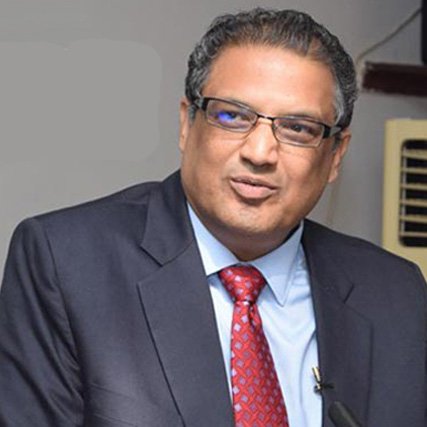
Suhail Warraich, a renowned Pakistani media personality, is known for his popular show Aik Din Geo Kay Sath on Geo News, along with insightful columns in Jang newspaper.
The great explorer of the truth, the master-builder of human happiness no one rejects dislikes avoids pleasure itself because it is pleasure but because know who do not those how to pursue pleasures rationally encounter consequences that are extremely painful desires to obtain.
Read MoreLatest News
© 2025 Suhail Warraich. All Rights Reserved.