 Colors
 View Books
When an earthquake is about to hit, insects and crawling creatures sense it beforehand. Ants start running here and there in restlessness and anxiety, but the pigeon closes its eyes upon seeing the cat approaching. What was destined to happen was bound to happen, and so it has; the bugle has sounded. The loud whistle is giving a clear signal to everyone, high and low, to line up. Now the time for hesitation and ambiguity has passed—this side or that side? Preparations for this inevitable outcome had been underway for a long time. Warning, alert, ready! In the early days of June, a student-like attempt was made in writing to trace the coming events. Now, successive events have gained speed. The shortcomings regarding the political government, the economy, and the political narrative that were as clear as the daylight were bound to lead to some outcome or the other. The two major allies of this wooden government pot—Noon [PML-N] and Peepley [PPP]—were moving together making promises and pacts, but neither had any preparation for the earthquake, nor do they have it now. The wooden pot lies in the town square, and stones are being pelted at it. The story is the same old one of the proximity between Iron and Paras [the Touchstone]. In the ancient Indic and Urdu Sufi traditions of the subcontinent, the metaphor of iron and Paras has been frequently used. Its foundation rests on the mythical concept of the “Paras” stone, that with the touch and contact of Paras, iron transforms into gold. In science, there is no such proven stone, but the story of iron and Paras has been presented as an example in the mythological and literary world. Let us try to learn from this very story to read the situation and deduce the future outcome.
With reference to Paras, ancient alchemists believed that an animal had converted into the shape of a stone. This conceptual red-colored stone, mixed with sulfur and mercury, could turn iron into gold. This mythological story was so popular among the common folk that King Henry VI of England constituted a formal commission in 1455 to make gold from iron so that the kingdom’s debt could be paid off. Obviously, that commission failed, but this concept is still common in the East and the West. Ascetics [Sanyasis] are still roaming around in search of this stone so that they can become rich overnight. In literary and Sufi tradition, Paras is a metaphor for power, authority, and wealth, whereas iron is a symbol for the ordinary or the raw. Iron is a metaphor for the common people, but when touched by Paras, it becomes gold and joins the ranks of the elite. When conditions are normal, no one gives a thought as to which iron has gained a special audience with which Paras, but when conditions are extraordinary, truth gets separated from falsehood [milk separates from water]. When the Great Resurrection takes place, a mother will not be able to care for her child. A minor political resurrection is taking place, so the ranks have broken; the limit is that even the federal cabinet is not speaking in one voice.
Some irons have run and taken the side of Paras, while the party’s and core stance of the “Iron of Irons” is still not known to anyone. Peepley irons have been ruling in Sindh for the last 17 years; Paras suited them so much that they began to consider themselves as Paras. But iron is iron, and Paras is Paras. When the need and priority change, Paras takes no time to change the iron; all types of iron are available to it at all times. The chair of power and authority is that Paras which softens even the hardest of iron, and then a time comes when the past’s stone-shattering iron turns and twists on its own. Peepley irons now stand at a crossroads: on one side is the charm and glitter of Paras, and on the other side is the sacrifice of ideology and politics. If they remain attached to Paras, the glitter, pomp, and show will remain intact, but the soil of politics beneath their feet will slip away forever. And if the Peeplya iron holds onto the soil of politics and leaves Paras, there is a fear that the iron will again have to pass through a river of fire and blood, and this path is the most difficult. Now is the time to decide; the bugle has sounded, and now the iron’s compromise does not seem to work.
On the other hand, the head [Pardhan] of the Nooni iron has been embracing Paras for two decades. The matter is not limited to Paras’s caresses, respect, and love; now he has made it the center of devotion. Paras and the Nooni iron have gone beyond a single-page story and have been included in the syllabus. Paras loves Nooni iron and Nooni iron loves Paras so much that it is difficult to separate them. But the head [Pardhan] is surprised at the blowing of the whistle and must be worried about those irons who are already breaking his ranks and, in their desire to touch Paras, are stretching their necks to get their names registered. The Nooni “Iron of Irons” and the Iron Man, as usual, have observed a vow of silence; it remains to be seen whether he stays tight-lipped on the division of the province or speaks up. The Nooni head is ready to do everything for the sake of Paras, including the division of the province, because he believes that the partnership of iron and Paras alone can turn the pure land [Pakistan] into gold.
Without the Insafi iron sitting in jail, it is difficult to fully understand this story of iron and Paras. Whatever the reason, as the wooden pot is breaking in the middle of the town square, the importance of the iron sitting in jail has doubled. On one hand, the iron is receiving spiritual signals in jail that it is no longer just iron but has turned into pure gold [Kandan], while Barrister Gohar and his associates are presenting the logical and practical argument that without touching Paras, iron is useless—it is just an ordinary metal. In 2018 too, touching Paras had yielded power, and even now there is a need to open a way. The official spokesperson [Sarkari Tooti] must also be eager to break the news of conquering Larkana along with Suhail Afridi’s grand army. The Insafi fish is restless with hunger, and on the other side, the bait of release and facilities is ready to hunt it. The misfortune of the government’s allies is that while their mutual conflict is leading them toward decline, on the other hand, the decisive power has gone into the hands of their eternal rival. This is how decline begins. On the flip side, the Insafi iron also has to decide that it does not fall into a trap under the positive names of expediency and reconciliation, causing its sacrifices in jail and its movement to go to waste. On the other hand, the irons aligned with Paras look like shining gold, but no matter what they do, they themselves cannot become Paras. Iron remains iron; the shine is temporary, and the shadow of power and authority is not permanent but transient. When Paras is near, making every impossible thing possible seems easy. Dictating one’s will or bending the iron feels like child’s play. What has not happened in history, and what will not happen! Only that iron is remembered which kept public interest and public will in mind. Through force and coercion, many Paras kept building towers of corpses, kept bringing new systems, and kept dividing and re-dividing, but the eternal lesson of history is that only the one who unites things and regions, provides ease to the people, and delivers peace and abundant food is remembered in golden words.



Post Comment
Posted By
Abdullah Liaqat


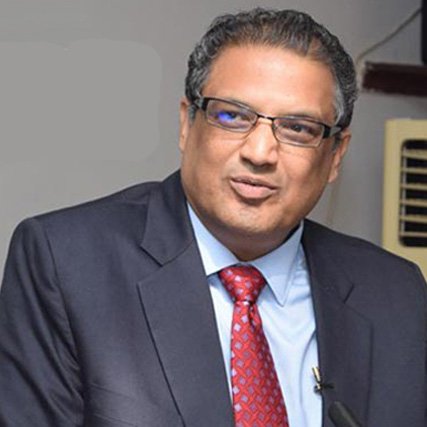
Suhail Warraich, a renowned Pakistani media personality, is known for his popular show Aik Din Geo Kay Sath on Geo News, along with insightful columns in Jang newspaper.
The great explorer of the truth, the master-builder of human happiness no one rejects dislikes avoids pleasure itself because it is pleasure but because know who do not those how to pursue pleasures rationally encounter consequences that are extremely painful desires to obtain.
Read MoreLatest News
© 2025 Suhail Warraich. All Rights Reserved.