 Colors
  View Books


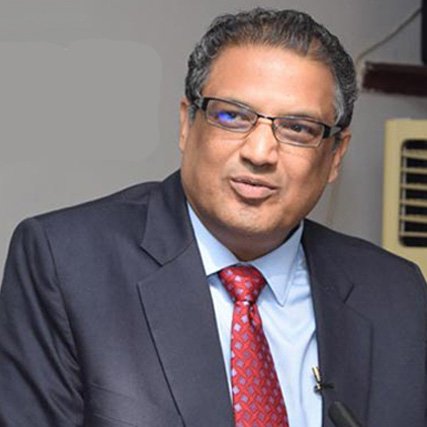

Maulana Fazlur Rehman is indeed a traditional cleric, but in gatherings he creates such vibrancy like worldly people that every time one meets him, the closeness of the relationship deepens further. Among today’s politicians, dryness is visible from afar, but Maulana Fazlur Rehman possesses that pleasing temperament which distinguished Nawabzada Nasrullah Khan, Qazi Hussain Ahmad, Nawab Akbar Bugti, and Mir Balakh Sher Mazari from others. In political gatherings of the past, respect, affection, and decorum were prominent; differences of opinion were expressed with gentleness and logic, and even if there was disagreement, respect in behavior and relationships was not allowed to fracture. When Maulana Fazlur Rehman came to Lahore a few days ago, he invited some journalists and revived the memory of those gatherings.
Maulana Fazlur Rehman is called a king of politics; he knows the art of speaking. He expresses his thoughts through logic and reasoning, reinforces his stance with examples. His tone remains soft, yet presenting even the harshest complaints in it is his unique skill. He is the one who can tell even the most powerful that anger was forbidden by God Almighty to the Prophet (peace be upon him), so you too should avoid it—and surely even the powerful must have agreed with his advice.
When the conversation with the Maulana began, everyone wanted to ask him about the latest situation in Afghanistan. After a barrage of questions on the same topic ended, the Maulana smiled and said in a statesmanlike tone that the concern is that Pakistan’s borders with Afghanistan, India, and Iran are all closed for various reasons. When borders are closed, trade and economy suffer—and they are suffering. He said that we cannot afford a two-front conflict. Regarding Afghanistan, he also shared the good news that the Taliban government there is itself troubled by extremist groups and is taking action against them. After Pakistan’s intense bombardment, the Afghan government realized that extremists posing a threat to Pakistan have become a threat to them as well. The Maulana spoke about his native districts—Dera Ismail Khan, Bannu, and Lakki Marwat—saying that extremism is at its peak there. Just a few days ago, these so-called Taliban shot and killed a police SHO. Expressing the dilemma of state and politics, he said that in Khyber Pakhtunkhwa a policy full of contradictions is being implemented; even now there are “good” and “bad” Taliban. Some state institutions, in the name of “good Taliban,” support criminals. He gave an example that a Taliban member who killed a serving uniformed officer was released by saying he is our own man, let him go. In his view, this dual policy is destructive.
Maulana Fazlur Rehman is not limited to the thinking of a hujra; he keeps a deep eye on international and foreign affairs as well. Regarding a potential Iran–America–Israel conflict, he appreciated Pakistan’s neutral and mediating role. Prime Minister Shehbaz Sharif occasionally takes him into confidence regarding his government’s efforts. The Maulana fully understands that state pressure and extremist pressure are different and contradictory elements. Negotiations are possible with state pressure; even that is not possible with extremists. According to the Maulana, what kind of jihad is this that is carried out only in Pakistan? Whether from Afghanistan or Arab countries, whether ISIS or Taliban or various other groups—why have all made Pakistan their battlefield? Why do they not go and wage jihad against non-believers elsewhere?
The Maulana’s concerns had more than two aspects. One was that the FATA regions were merged into the province without preparation; the old system was abolished, and the new system could not be established. Thus, it has become a case of neither here nor there, and now no one looks after these areas. His second major concern was the official registration of religious seminaries. He said that with government consultation and cooperation of seminaries, modern subjects were included in the curriculum. It was said that if this happened, degrees equivalent to universities would be granted. But not only have degrees not been granted or officially recognized, even the bank accounts of seminaries are not being opened. Every day, the administration raises new objections. Seminaries of so-called organizations are being registered, while major schools of thought are being ignored. When this issue is raised with the federal government and the establishment, they say it is not even a problem—but even after many years, it remains unresolved.
Regarding Pakistan’s internal politics, the issue of alleged rigging in the 2024 elections is still stuck in his mind, and he complains that his mandate in Khyber Pakhtunkhwa, Balochistan, and Sindh was taken away and given to others. In his view, only in Khyber Pakhtunkhwa he had a clear lead on 16 National Assembly seats, but for unknown reasons these seats were taken from him. Regarding possible cooperation with Pakistan Tehreek-e-Insaf and a joint movement, he said both parties are in opposition and their social relations are very pleasant. About future alliance or cooperation, he said every PTI leader claims Imran has sent him a message to deliver, but each messenger’s message is different and contradictory—so whom should one believe?
Those who understand Pakistani politics consider Maulana Fazlur Rehman a master of political chess, but many do not know that he also analyzes the personalities of people around him with great skill. His analyses are not immediately understood, but with time, when they begin to prove correct, one realizes how capable he is of analyzing in a non-emotional and scientific manner. He said about those in power that regardless of their background, once in power their thinking becomes limited to self-interest and lust for authority.
Maulana Fazlur Rehman and Mahmood Khan Achakzai are among the last few remnants of traditional politics—like the last pieces of bread from an old griddle, whose taste is traditional. The new breads and naans now being sold in the name of politics are baked in artificial ovens—they have neither taste nor effect. The old breads still taste good because they contain not just grain, but also the seasoning of personal affection, respect, and tradition. This is why every journalist who met Maulana Fazlur Rehman invited him to their home for a meal on his next visit to Lahore. Whether Mujeeb-ur-Rehman Shami, Iftikhar Ahmed, Hafeezullah Niazi, Habib Akram, or this humble writer—all sincerely offered to host him, because such gatherings have now become rare.
Though Maulana Fazlur Rehman did not explicitly say it, it can be analyzed that there is no immediate possibility of political change in the country. Global circumstances have pushed such possibilities far away. So for now, one must make do with what exists—willingly or unwillingly. The choice is yours…!
