 Colors
  View Books
 Contradistan is our beloved country and we eat the bread of its stove. This is our own stove and our own bread. From a romantic and patriotic point of view, being patient and grateful for this bread is obligatory and objecting to it is a sin. Baba Fariduddin Ganj Shakar even declared bread — “tik” or “takkar” — as the sixth pillar of Islam, and obviously, whose food you eat, you sing his praise. Giving it respect is necessary, but the quality of the bread is determined by the quality of the stove. This is what “as the stove, so the bread” means. A similar proverb is “as the face, so the slap.” The meaning of this proverb is that you receive what you deserve. This is based on the philosophy of fatalism in which one must be content with the compulsion of fate. But the opposing philosophy is to make one’s own destiny, to improve the quality of one’s stove, to make one’s bread better and better. Eating burnt bread and undercooked bread cannot be the compulsion of fate. We change destiny only through the planning of those who light and run the stove.
Let us begin with the biggest stove of Contradistan — the political ovens. The political breads we have baked through our politics are either undercooked or overburnt. Sometimes they are “madri” suitable only for the elderly to eat, and sometimes made “chhandi” to make them crispy. Some “tandonchi or dai” prepare “gali” (soft mash) for children, and those who eat it remain children in politics forever because, having eaten ‘gali’ again and again, they become used to it and never grow up throughout their lives.
The nature of our oven is strange — its oven-bread is different and contradictory to one another. These breads fight among themselves and turn Contradistan into a fiery oven. The oven is already hot; when oil of hatred, prejudice, and competition is poured into it, it flares up further. The fallen of the earth and the bread-eaters desire that change come in the oven and bread sector of God’s settlement. The supremacy of constitution, law, and democracy be established, and the bread-eaters enjoy eating “chhandi, crispy breads.” If burnt breads are eaten, there will be stomach pain, and according to a famous tale, the physician will treat their eyes before treating their stomach — that when the burnt bread was visible, why did you eat it? The eyes of those who eat burnt bread are treated.
Baba Farid’s “bread, takkar” and Bhutto’s “bread, clothing and shelter” are in fact symbols of the economy. Public prosperity is the sector that has always been neglected. In today’s economic oven, the number of breads and soft mashes is continuously decreasing. The intensity of the fire in the oven is low, and perhaps the wood is not dry but damp — therefore the bread in every house of God’s settlement has been affected. The expectation was that fragrant sandalwood would come from the Middle East for our economic stove, then the stove would emit fragrant smoke, the breads would bake well, and everyone would like them. But in today’s world, everyone focuses on their own economic stove. One gives wood only if it benefits them; otherwise, their own stove may grow cold. Nowadays attempts are being made to burn the economic stove with local wood. The government is trying to ignite the fire with a “blower.” Again and again, with “tongs,” it separates the ashes of burnt wood, but everywhere there is only smoke. The fire of the economic stove is not igniting. The “blowers,” the “tongs,” and the bakers are all striving. The burnt, undercooked, madri and gali eaters await manna from the sky, sandalwood from the Middle East, and double bread from the West. Would that we think of running our oven with our own wood and our own “grains.” “He whose house has grain, even his madmen are wise.” Strengthening local agriculture and industry is the lasting solution, but agriculture is suffering repeated losses. Farmers growing wheat and potatoes are worried. If those who grow grain are not happy, how will grain come for the oven? If the industrial wood does not burn, how will the oven heat? And if the oven does not heat, how will people eat bread?
Bread-eaters want hot naan and bread; therefore hot stoves and blazing ovens are necessary. Though in the modern world the system of hot bread, domestic stoves, and ovens has changed, habits are the hardest to change. And according to Oscar Wilde, “I can resist everything except my own inner desires.” So for Contradistani bread-eaters, to provide hot stoves and hot bread, tradition must be combined with modernity. For this, knowledge and technology must be used. In America and Britain, bread-like pita bread and paratha are also available — only heating makes them ready to eat. In better times, Bhutto Sahib the First had established bread plants and cheap bread became available in the market. Many in our society have gone overseas. They live in technologically advanced countries; they are wealthy, hardworking, and intelligent. But as the Chinese and Koreans sent the world’s education and skills back to their own countries and promoted them, our overseas Pakistanis did not do so. Here, neither ovens modernized, nor did restaurants achieve Western standards of cleanliness, nor did education witness such a revolution that we could compete with the West. We bread-eaters can benefit from expensive private education, but obviously they are so costly that middle and lower-middle class bread-eaters cannot send their children there. The lower class is compelled to remain limited to government schools and colleges. In the modern world, government does not run ovens and schools; rather it sets principles and regulations so that stoves do not explode and ovens bake good crispy bread. The government is a regulator, but even this work is not being done properly. Education and technology are the only ways through which we can compete with the modern world; otherwise damp wood will keep spreading smoke, neither good bread will be available nor peace and tranquility.
Stove, oven, and bread are symbols of the economy. To say it plainly, the economy of Contradistan is badly stuck like stagnant water of a pond — in silence, stagnation, and trial. Despite showing grand golden dreams, practically even oil enough for the stove has not been received. We have emerged from one crisis only to be struck by many storms. Billions in foreign debt installments are due. The economy is suffocated; winds do not appear to blow far. If the oven does not receive wood and oil, then blowers and tongs will all remain useless.
To fill embers in the ashes of the stove, the bread-eaters of politics must sit together on a national tray or tablecloth. The more delay in this work, the more questions will arise about the heat and intensity of the economic oven. As we are, so is our country — as the stove, so the bread



Post Comment
Posted By
Abdullah Liaqat


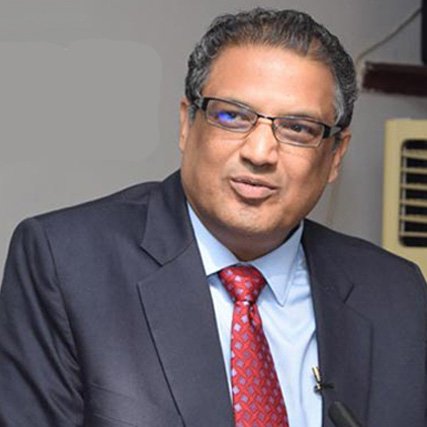
Suhail Warraich, a renowned Pakistani media personality, is known for his popular show Aik Din Geo Kay Sath on Geo News, along with insightful columns in Jang newspaper.
The great explorer of the truth, the master-builder of human happiness no one rejects dislikes avoids pleasure itself because it is pleasure but because know who do not those how to pursue pleasures rationally encounter consequences that are extremely painful desires to obtain.
Read MoreLatest News
© 2025 Suhail Warraich. All Rights Reserved.