 Colors
  View Books


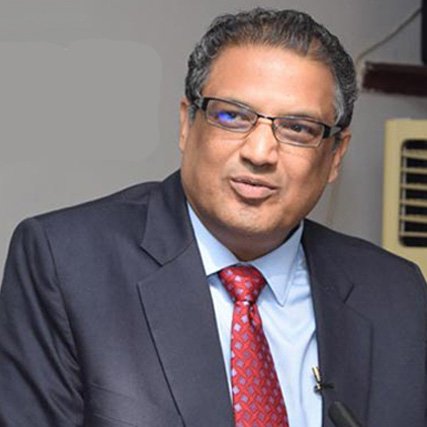

Until yesterday, there used to be a Raja here. He had neither a kingdom nor, in fact, any politics of his own. He was not a Raja in name alone; he was a Raja of the heart and the soul as well. Wherever he was, laughter, peals of joy, smiles, and calmness would take up residence. He was a spark—appearing suddenly like a flash of light, laughing, playing, smiling; spending a few days among his friends and companions, distributing happiness, and then suddenly disappearing.
Yesterday, he passed away in a car accident in Islamabad. Yet, just as he had always defeated the accidents of fate and made sudden returns, who knows—one day he may reappear, laughing, smiling, teasing, and say that my accident, my death, was all a joke; I am back again to give pleasure to my friends, to make them laugh, and to tickle them with my chatter….
For the past four or five days, Raja and I were together in Balochistan. Sometimes we traveled through remote mountains, sometimes through the corridors of power. Stealing moments from his busy schedule, he would whisper such things into my ear that the fatigue of the entire day would disappear. He was a Raja of the heart, but also a carefree spirit. He never did any work steadily throughout his life. He wandered the dust of the world, yet it was this very soil that he loved. His children and wife lived in Bradford, while Raja Sahib himself lived in the paradise of his heart—Pakistan.
When his wife would say, “I want to come to Pakistan and take care of you,” Raja Sahib would reply, “The conditions here are not right; Britain is better.” And then, with great amusement, he would tell his friends how essential freedom is. So the wife in Britain and Raja in Pakistan—this, he said, was the best and safest arrangement.
These days, Raja Sahib was in full bloom. After long spells of unemployment and wandering from pillar to post, the Chief Minister of Balochistan, Mir Sarfaraz Bugti, finally recognized this diamond and appointed him as his media focal person. Raja was truly raja-puja—personally humble, yet protocol delighted him, and these days he was receiving this delight in abundance. Novelty and modernity in clothing and gadgets were part of his personality. He was always equipped with the latest phone, the latest camera, and recorder. In those days, he was wearing a modern pair of glasses through which he could record video whenever he wished, without anyone knowing.
Raja’s name was Matloob—and he truly lived up to his name, for he was always “desired” by his friends and companions. And how could it be otherwise? Even though he may have departed, he will remain desired by his friends for a lifetime.
My first meeting with Raja was in 2003. In those days, he was employed with the Dubai city government. At that time, Pakistani television channels had offices in Dubai. Mohtarma Benazir Bhutto was also residing there then. Because Dubai was a center of political activity and journalistic interest, I traveled there often during those years. On every visit, Raja would become my guide. Meetings, meals, sightseeing—he planned everything. Remaining in the background and placing his friends in the foreground was among his noble qualities.
When my special student Usman Butt became Raja’s friend, Raja’s circle of friends and patrons in the media began to expand. Usman Butt, Iqrar-ul-Hassan, and Waseem Badami worked at the same channel. Raja’s closeness with Waseem Badami and Iqrar-ul-Hassan grew so much that they became inseparable companions. Raja himself became an anchor, a media advisor, and an event organizer, yet he could not ride the mount of fame himself. Still, his companionship was such that many riders of fame were fellow travelers in Raja’s gatherings.
Raja understood the temperament of his friends. A good Raja always understands the temperament of his subjects. When Waseem Badami, Iqrar-ul-Hassan, and Yasir Shami were present in the gathering, satire, humor, taunts, and mockery would reach their peak. If Saleem Safi or Yehia Rorha Kora were present, Raja would maintain respect and use wit and double-meaning remarks as his weapons. If Sarfaraz Bugti, Faisal Karim Kundi, Mustafa Kamal, or Bilal bin Saqib were present, he would be courteous—and from time to time, he would say something that, even if they did not show it outwardly, would inwardly delight them.
Raja’s excellence was that he did not believe in gender distinctions in friendship. Men were part of his gatherings, and women equally enjoyed his humor, jokes, and laughter. After remaining absent for months, Raja would suddenly appear one day and call on the phone to ask, “Are you at home?” Upon receiving an affirmative reply, he would arrive with a group. The group would include one or two male friends, but mostly women. The same laughter and jokes, the same enchanting conversation, the same diary of the entire world—and then a cheerful farewell.
Raja’s life was so full and multidimensional that one would be astonished simply by hearing about his diverse experiences. He knew the likes and dislikes of women, and the preferences and rejections of men. When fashion was discussed, he would express his expert research—from plastic surgery to traditional home remedies. His friends were permanent, but his beloveds kept changing. He never betrayed a beloved, nor did he abandon one; perhaps the beloved herself would grow tired of his lack of seriousness.
He was desired by everyone, yet to some he was more desired and to others less. That depended on the other person’s capacity and temperament. No one was ever angry with him, because he never gave such an opportunity. Perhaps people—or beloveds—separated from him themselves, because they could not keep pace with him. He was so pleasant that perhaps he could not become a consoler in sorrow.
Whether in kingship or in politics, arrogance repels people. Whether a humorist or a satirist, one who mocks or jokes is liked only if he presents himself as small and others as great. Through self-criticism, Bulleh Shah and Shah Hussain were able to tear apart the cloaks of great judges, kings, and rulers. Raja Matloob had grasped this secret as well. He would first make fun of himself, make his own self the target of mockery, first prove himself guilty, and only then scratch at others’ cloaks.
Is it not astonishing that Raja Matloob shared gatherings with Mufti Abdul Qavi of Multan, and was also a companion of the respected Pir Naqeeb-ur-Rehman of Eidgah and Hassan Haseeb-ur-Rehman? Who could be so diverse except Raja Matloob?
Raja and I arrived together in Lahore from Quetta. There, he had arranged a car. He said, “I have to go to Islamabad now.” As soon as I reached home, I slept like a log, exhausted from five days of fatigue. When I woke up after sleeping at 3 a.m., there was news on my mobile that Raja had reached Islamabad and met with an accident.
I could not believe it. It felt as if Raja had played a prank, and upon waking in the morning, his laughter-filled voice would be apologizing for a serious joke. But this time, he lost his life and once again defeated everyone. For us, he is no longer Matloob—no longer present—so we are grief-stricken. But I am certain that he is hosting a gathering with his late father Raja Tahir, seating together Alexander the Great—who passed through Puran (their village near Sarai Alamgir; Puran means “old”)—and Porus, who lived across the river. He was a Raja, and he will remain among kings like Alexander and Porus.
