 Colors
  View Books


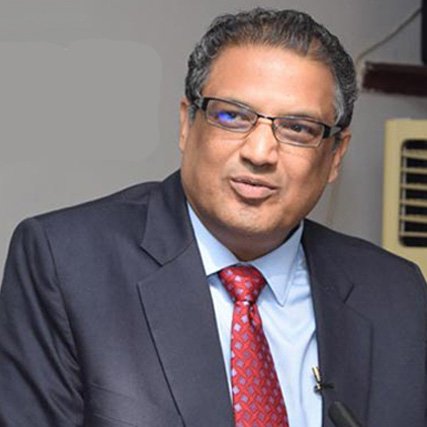

Khawaja Asif’s leaps.
Khawaja Muhammad Asif is the colour and sparkle of Contradictoria’s politics and journalism. He keeps saying something or the other that creates waves in the sea of political silence. Khawaja Sahib is a great adventurer and an excellent swimmer. Every year in the summer, his annual photograph—wearing shorts and jumping into the river with friends—represents Sialkoti culture. Just as he fearlessly jumps into the river despite his advancing age, his political comments are equally uninhibited. It is unknown how he is as a lover, but one can guess that the way he makes a chhaal (Punjabi for leap) into the fire of disagreements, he must cross the rivers of love just as easily.
Recently, Khawaja has made a new leap. It may be a calculated move, but this leap has caused upheaval in the fragile palaces of power. On one side, Faiz Hameed was court-martialed; on the other, Khawaja Asif demanded the accountability of General Bajwa as well. It is possible that Khawaja Sahib struck this chord merely in jest, but the bells of this chord rang far and deep into the past. His demand was taken to mean not the accountability of one individual, but of every individual who had interfered in politics in the past. The power centers, however, have learned from experience that once the journey of accountability for all begins, it practically means that no one will be held accountable. The argument given is that since accountability of everyone is practically never possible, when the slogan of accountability for all is raised, suspicion arises regarding the specific individual being held accountable—that since everyone was guilty, this poor fellow alone is being made to suffer. That is why this statement was taken seriously, and a formal clarification followed: that neither is the accountability of General Bajwa nor any case against him under consideration, nor has any such evidence emerged that could prove his involvement in the unlawful actions of Faiz Hameed.
Interestingly, Khawaja Asif was among those one-time leaders of the Pakistan Muslim League (N) who, during the Imran Khan era, remained in continuous contact with General Bajwa and his father-in-law General Ijaz Amjad, kept correspondence and messages going. Khawaja Sahib also enjoyed the “honour” of informing the PML-N parliamentary party about Nawaz Sharif’s decision regarding the extension of General Bajwa, and he also presented its pleasant justifications.
Khawaja Asif is that Sialkoti lad for whom perhaps the song “Ve Mundya Sialkotiya” was written. In politics, he shoots arrows with calculated aim—sometimes blowing off the nose of his opponent, and sometimes piercing the eye of his own ranks. Sometimes he angers the establishment, and sometimes red lights begin to flash in the Foreign Office. When he announces a hybrid system, he exposes the helplessness of his own party’s cabinet. When he opens the ledger of mistakes in the war of Contradictoria, he bursts the boils of the heart of the past establishment. Sometimes he annoys his own cabinet colleague Hanif Abbasi, and sometimes he throws the entire government into difficulty. A few months ago, on account of one such “misfire,” it was seriously considered to remove him from a critical and highly sensitive post like Defence and assign him charge of a less sensitive department—so that he could keep making statements and not create trouble for the government. Later, Mian Nawaz Sharif did not permit this change.
In recent days, when Khawaja Asif struck a tune against General Bajwa, the air was already filled with the notes of Nawaz Sharif’s words, which included the demand that after Faiz Hameed, the remaining characters who had launched him into the political arena should also be held accountable. In many political circles, these two separate statements were read and viewed together, giving the impression that this would be the future N-League refrain. While this statement would have caused concern to General Bajwa, it must also have caused shock—because it did not come from just any N-Leaguer, but from his old benefactor and messenger, Khawaja Asif.
Then the political strings began to move. The same names—who on the last day of General Bajwa’s tenure had personally received the list of the new Army Chief from him and delivered it to the Prime Minister House—became active again. They repeatedly met government and political figures and explained to them that Khawaja Asif wanted to break his own ranks, that if he sought to bring former national chiefs or officers to the dock, it would not only spread restlessness within the establishment but also severely damage the understanding existing between the N-League and the establishment. It is said that the admirers of General Bajwa succeeded in their efforts. The echo of Khawaja Asif’s statement had not yet faded when his voice was suppressed, and now the Ravi once again writes of peace.
Since Khawaja Asif is an expert in leaps and hits his targets well, both his allies and opponents harbor envy toward him. Some are consumed by jealousy of this Sialkoti lad for winning the biggest trophy in the field of beauty. Khawaja Sahib must possess a gidar singhi (a mythical talisman), due to which he has been winning every time since entering politics. He has enjoyed several ministries and has passed through the hard trials of accountability and imprisonment as well. Whenever he wishes to conquer a fortress in the field of beauty, he strikes like an expert spearman—silently, fearlessly, and boldly—decapitating the target and walking away, while spectators and other spearmen are left staring.
Whether Khawaja Asif is a master of chess or not, he certainly plays political moves very well. In every election, he changes his electoral panel. With new faces and a clean slate, he checkmates his opponent every time. In 2018, it became famous that he had complained to General Bajwa about being defeated in the election, as a remedy for which a close relationship between General Bajwa and Khawaja Asif was highlighted. Yet, during General Bajwa’s own tenure, Khawaja Asif also remained afflicted. Perhaps this is why, despite close relations, he has grievances against General Bajwa—and that is why he is demanding his accountability.
Khawaja Asif’s leaps do not quite align with Shehbaz Sharif’s calm style of governance. Shehbaz Sharif has adopted complete silence over allies and the government’s internal battles. To the extent that he is not even complaining to Khawaja Asif about his leaps; he merely keeps pouring water on the fire at all times.
